
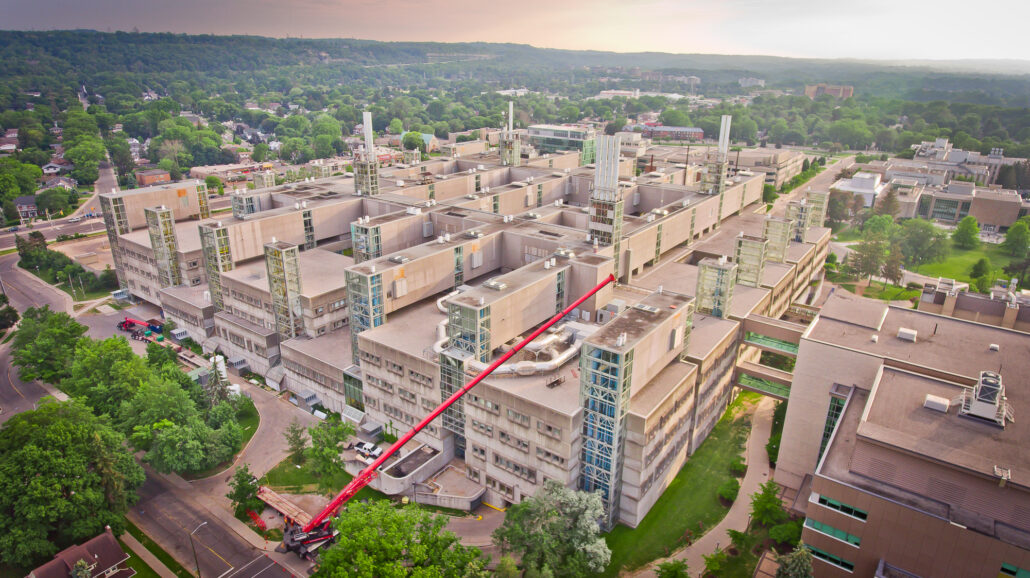
Featuring Hamid Mortazavi, CFD Engineering Specialist, and Viken Koukounian, VP of Engineering, Innovation & Technologies
When engineers think about environmental noise control, the conversation often starts with one question:
How do we make equipment quieter?
Today, however, a second question has become equally important:
How do we reduce noise without compromising performance?

As mission-critical facilities become more complex, cooling systems become larger, and thermal demands continue to increase. Engineers are being challenged to balance multiple priorities simultaneously. Acoustic compliance, airflow performance, thermal management, energy efficiency, and operational reliability can no longer be treated as separate considerations.
For Parklane’s engineering team, this challenge became the foundation of a research project presented at the Canadian Acoustical Association (CAA) Conference in 2025: Bridging the Airflow Gap: Proposing a New Efficiency Metric for Louvered Screen Performance.
The findings challenged several long-standing assumptions about how louvered acoustic screens behave once they are installed and operating in real-world conditions
The Blind Spot Hiding in Plain Sight
Louvered acoustical screens have been used throughout the environmental noise control industry for decades. Yet one of the biggest misconceptions surrounding them remains surprisingly common.
“The industry’s biggest misconception has been assuming that louvered acoustic screens behave the same way as conventional louvers. In open environments, the airflow behavior is fundamentally different.”
— Viken Koukounian, VP of Engineering, Innovation & Technologies
Traditionally, aerodynamic performance of louvers (i.e. AMCE 500L test standard) is often obtained using enclosed airflow conditions where air is forced directly through the louver. However, they are frequently installed in open environments as louvered acoustical screen where airflow can enter from multiple directions.
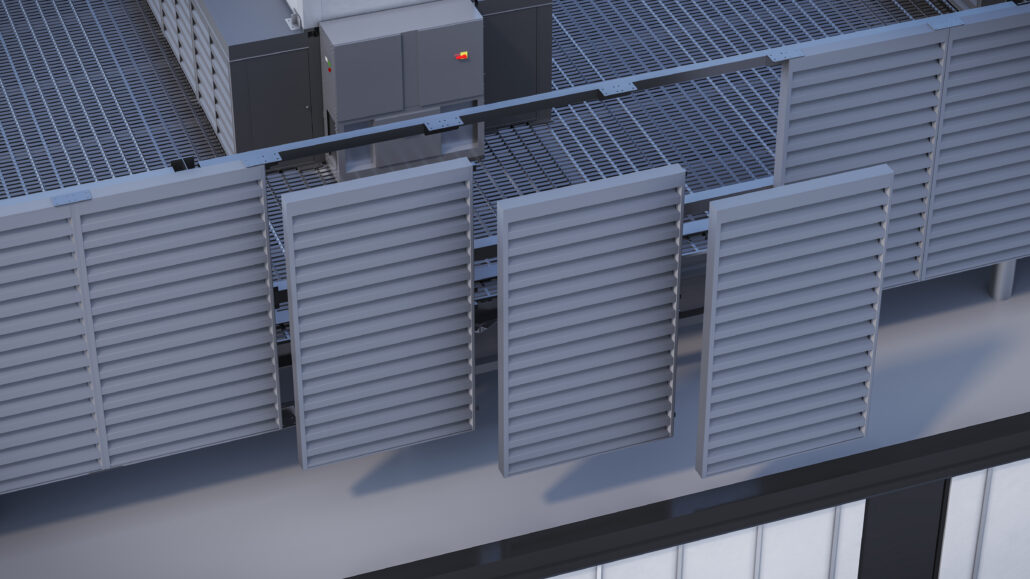
When airflow can bypass from the sides, top, or bottom of an enclosure, traditional assumptions around pressure drop and face velocity no longer provide a complete picture of performance.
For years, the industry relied on these assumptions because they were the best tools available. But as facilities become larger and thermal margins become tighter, the limitations of those assumptions have become increasingly difficult to ignore.
When Noise Control Creates Operational Risk
But what happens when the solution itself begins affecting the equipment it was designed to protect?

For mission-critical environments such as data centers, cooling performance cannot be treated as a secondary consideration. Air-cooled chillers and other large-capacity cooling systems often have very little tolerance for airflow disruption.
Even modest reductions in available airflow can contribute to higher intake temperatures, reduced cooling efficiency, increased energy consumption, and greater operational risk.
Meeting acoustical targets alone is no longer enough.
The solution must also preserve the airflow required for reliable equipment operation.
The financial implications can be equally significant. Misunderstood airflow behavior can lead to oversized acoustical screens, overly conservative specifications, costly redesigns, and expensive retrofits when installed performance fails to align with design assumptions.
In today’s environment, validated performance matters more than theoretical compliance.
Why Traditional Metrics Aren’t Telling The Full Story
Historically, louver performance has been evaluated using metrics such as pressure drop, percentage of free open area, and face velocity.
While these measurements remain useful, Parklane’s research found that they do not always provide an accurate representation of how louvered acoustic screens perform once installed.
One of the most significant findings was that multiple products could exhibit similar pressure-drop values while delivering dramatically different airflow performance.
“Two products can produce similar pressure-drop values while delivering very different airflow performance. That’s why pressure drop alone isn’t enough.”
— Hamid Mortazavi, CFD Engineering Specialist
This distinction matters because equipment performance depends on airflow delivered to the unit, not simply the pressure measured across a component.
Two systems may appear similar on paper while producing very different operational outcomes.
The research also reinforced that traditional face-velocity calculations can become misleading in open-environmentapplications where airflow may bypass the screen through the top, bottom or sides. Same applies to louvered enclosures where we often have opening at the side and/or bottom
Ultimately, what matters most is how much air actually reaches the equipment.
Standards Still Matter. They Support The Whole Story
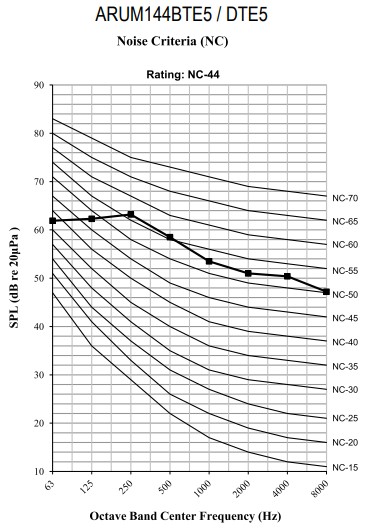
Standards such as ASTM E90, ASTM E477, ISO 9613, and AMCA 500-L remain essential tools for evaluating acoustic or aerodynamic performance.
They provide consistency, repeatability, and a common framework for comparing products.
However, these standards evaluate specific characteristics under controlled laboratory conditions.
Real-world installations introduce additional variables that standards alone cannot fully capture.
Site geometry, surrounding structures, airflow pathways, equipment interaction, platform configurations, and environmental conditions all influence installed performance.
As Viken explains, “The challenge is not that the standards are wrong.
It is that they were never intended to predict every aspect of how a system will behave once installed and operating within a complex environment.”
Laboratory testing remains important.
But increasingly, it must be supplemented by system-level analysis and validation.
Using CFD To See What Traditional Analysis Cannot
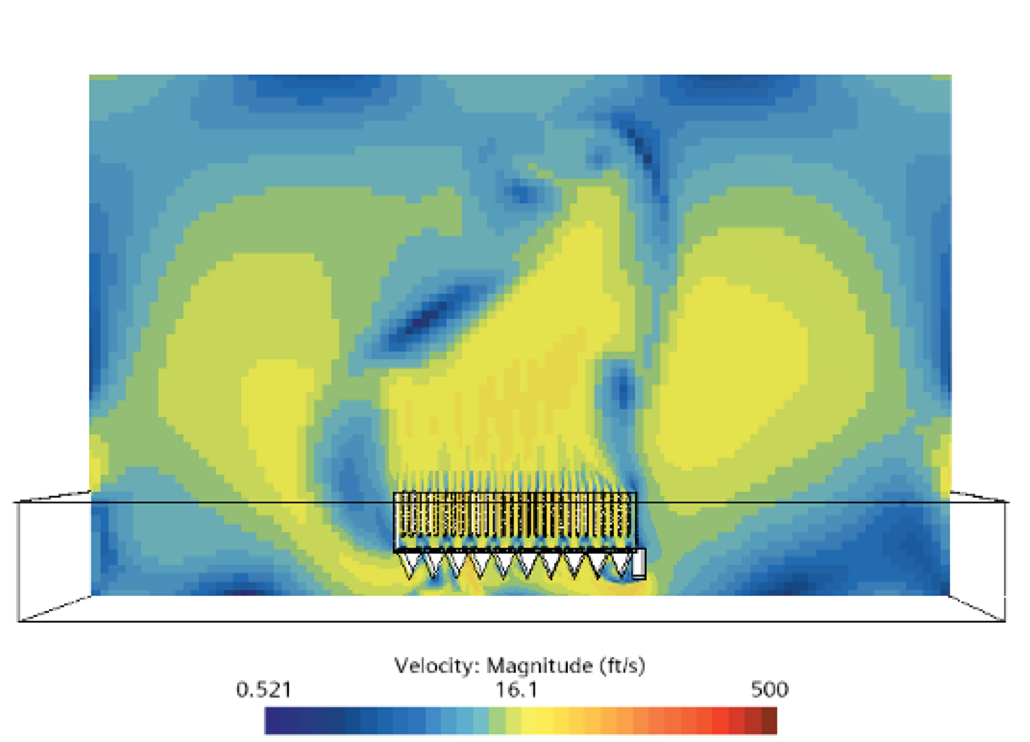
This is where Computational Fluid Dynamics (CFD) becomes invaluable.
When applied properly, CFD allows engineers to predict and visualize airflow behavior, pressure distribution, mass flow rates, recirculation patterns, and thermal effects with a high degree of confidence before a system is installed.
More importantly, it provides insights that traditional performance metrics often cannot.
Product-based CFD focuses on understanding the aerodynamic performance of a product itself. Site-based CFD examines how that product behaves within the complete operating environment, accounting for surrounding structures, equipment arrangements, airflow pathways, and site-specific conditions.
“CFD isn’t just about validating airflow. It’s about managing risk—having confidence that a solution will perform as intended in the field.”
— Hamid Mortazavi, CFD Engineering Specialist“CFD isn’t just about validating airflow. It’s about managing risk—having confidence that a solution will perform as intended in the field.”
— Hamid Mortazavi, CFD Engineering Specialist
Together, these approaches provide a more complete understanding of installed performance and help reduce uncertainty during design.
A New Way of Thinking About Louver Performance
The research ultimately led to a larger question:
Are the industry’s traditional evaluation methods measuring what truly matters?
Historically, performance discussions have centered around pressure drop and laboratory ratings. But these metrics often describe component behavior in isolation rather than system performance in operation.
The proposed efficiency metric shifts the focus toward installed aerodynamic effectiveness.
Instead of asking how a louver performs in a controlled test environment, engineers can begin asking how it affects airflow once integrated into a functioning system.
“The real question isn’t the pressure drop across the screen. It’s whether the installed screen permits the airflow required for efficient equipment operation.”
— Viken Koukounian, VP of Engineering, Innovation & Technologies
This shift may seem subtle, but it has significant implications for how acoustical solutions are specified, evaluated, and validated moving forward.
One Year Later, The Need Has Only Increased
Since presenting the research, the importance of the issue has only grown.
Data centers continue to increase in density. Sustainability goals continue pushing facilities toward greater efficiency. Cooling systems continue operating under tighter performance margins.
At the same time, there has been a noticeable increase in awareness around the importance of advanced CFD validation.
More consultants, owners, and project teams recognize that traditional pressure-drop ratings and laboratory test data alone do not always provide enough confidence for mission-critical applications.
There is growing demand for evidence that acoustical solutions will meet both acoustical objectives and operational requirements.
The conversation has evolved from:
“What is the rated pressure drop?”
to:
“How will this system actually perform once it’s installed?”
While industry awareness has improved, gaps in specifications and evaluation methods still exist.
And as thermal management challenges become more demanding, the need for validated aero-acoustic engineering continues to grow.
More Than A Product Supplier
For Parklane, this research represents something larger than a single technical study.
It reflects a broader commitment to advancing environmental noise control through performance-driven engineering.
Rather than focusing exclusively on product ratings or catalog data, the research emphasizes understanding how acoustic solutions perform once they are installed and operating in the field.
By combining acoustic engineering, CFD analysis, site-specific validation, and operational performance considerations, Parklane is helping move the industry toward a more integrated approach to environmental noise control.
The goal is not simply to deliver quieter systems.
The goal is to deliver quieter systems that perform exactly as intended.
Designing For Performance, Not Assumptions
The future of environmental noise control will require stronger collaboration between acoustic engineers, mechanical engineers, and CFD specialists.
When these disciplines work together from the beginning of a project, potential conflicts can be identified earlier, reducing uncertainty and improving outcomes.
“Acoustics and airflow can’t be treated as separate design problems anymore. They need to be evaluated together.”
— Hamid Mortazavi, CFD Engineering Specialist
Laboratory testing will always remain important.
But increasingly, project success depends on understanding how systems perform once installed and operating under real-world conditions.
That requires validation.
It requires system-level thinking.
And it requires moving beyond assumptions.
Bridging The Gap
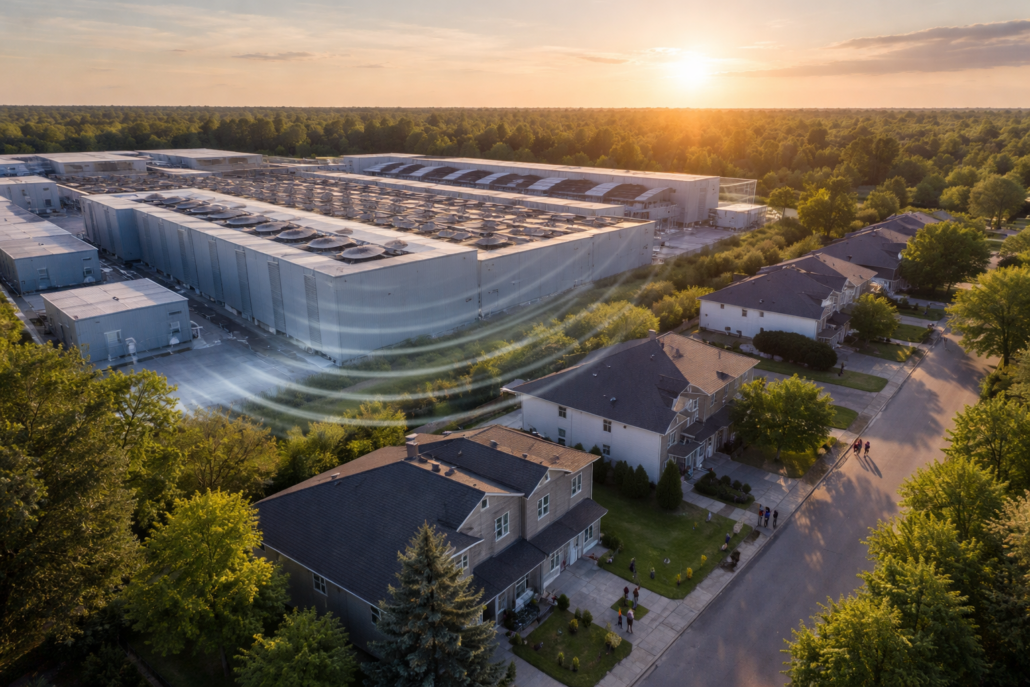
Effective noise control cannot come at the expense of operational performance.
As mission-critical infrastructure continues evolving, the industry must adopt design approaches that account for airflow behavior, thermal performance, and real-world operating conditions alongside acoustic objectives.
Parklane’s research represents part of that evolution.
By combining CFD analysis, installed-performance thinking, and evidence-based engineering, the company is helping redefine how louvered acoustic screens are evaluated and applied.
Because the future of environmental noise control isn’t just about making equipment quieter.
It’s about ensuring that quieter solutions still perform exactly as intended.
To learn more about CFD Modeling: CLICK HERE
To learn more about acoustic louvers: CLICK HERE
To contact us for more information: CLICK HERE