
Data Center Facilities
CHI
Data Centers
Located in Illinois near residential areas, two co-location data center facilities presented unique acoustic challenges associated with rooftop cooling infrastructure and varying site conditions. Parklane was engaged to develop tailored, engineered solutions that responded to these complexities, refining each approach to suit the specific environment while ensuring effective noise mitigation. Through a coordinated, systems-based design, the solutions also maintained required airflow, preserved equipment performance, and supported safe, ongoing maintenance access.

Overview
Parklane was engaged to deliver a fully engineered acoustic solution designed not only to reduce equipment noise but also to maintain required airflow, preserve cooling system performance, and support ongoing operational and maintenance access.
This systems-based approach ensured that acoustic control measures worked in alignment with the mechanical performance requirements critical to large-scale data center operations.
Rather than replicating a single solution, the project team refined and adapted each attenuation strategy to address the specific acoustic and operational conditions of each site, allowing for efficient delivery while maintaining consistency in overall performance objectives.
The Project Facility
Illinois Data Center Facility – Aurora
Illinois Data Center Facility – Wood Dale
The Noise Source
Aurora Facility: 10 Condenser Units & 21 Chillers
Wood Dale Facility: 14 Air Cooled Screw Chillers
The Solution
Aurora Facility: 21 Discharge Silencers & 2,000 Linear Feet of Acoustic Screening
Wood Dale Facility: 14 Discharge Silencers & 240 Linear Feet of Acoustic Screening
The Project Team
Acoustic Engineer – Ramboll
OEM – JCI and Vertiv
Reason for Mitigation:
Both facilities required acoustic mitigation to meet local regulatory noise limits and to minimize operational sound impact on surrounding residential communities.
A Head’s Up

Why Data Centers Require Integrated Noise Mitigation
Modern data centers rely on extensive cooling infrastructure to maintain stable temperatures for high-density computing equipment. Chillers, compressors, and condenser systems operate continuously and can generate significant mechanical noise when concentrated on a rooftop.
When these facilities are located near residential areas, municipalities often impose strict sound limits to protect nearby communities from excessive noise exposure.
Acoustic mitigation measures, such as discharge silencers and rooftop screening, allow facilities to control noise emissions while maintaining cooling capacity and operational reliability. As these elements can introduce changes in airflow and system pressure drop, integrated engineering is essential to ensure noise reduction is achieved without compromising cooling performance or equipment efficiency.
Project Challenges
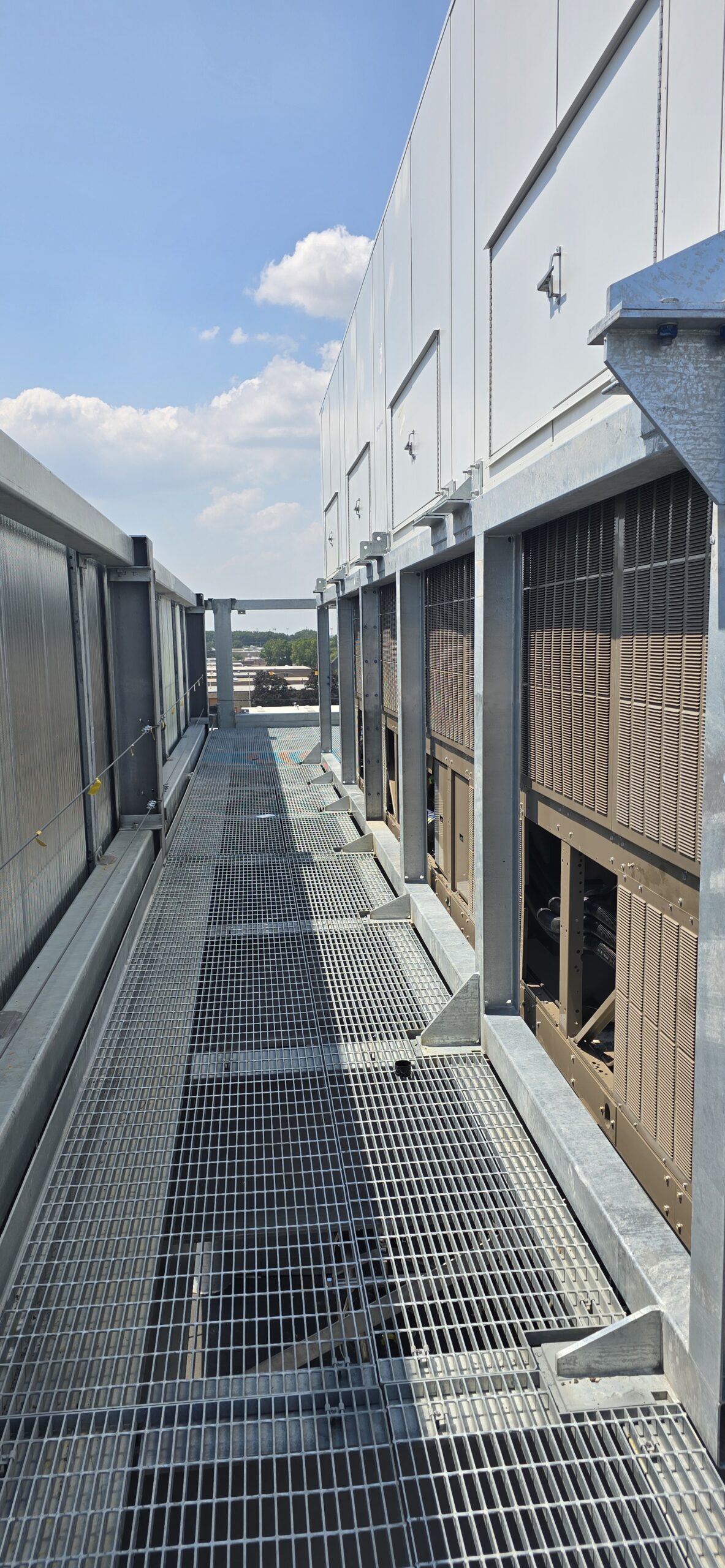
Project Scale and Integrated Noise Mitigation
With two large facilities operating near residential areas, the primary challenge was not simply meeting municipal sound limits but managing the sheer scale and complexity of noise control across dozens of mechanical units and operational variables. Each rooftop and yard installation introduced unique acoustic characteristics influenced by equipment type, operating conditions, building geometry, and structural capacity.
Addressing this complexity required more than isolated mitigation measures. Instead, it demanded integrated noise control strategies that considered the interaction between multiple noise sources, site layout constraints, and performance targets across the entire facility. By evaluating each unit within the broader acoustic environment, the project team was able to implement solutions that worked collectively to achieve compliance while maintaining system performance.
Large Rooftop Mechanical Installations
Both facilities featured dense, highly coordinated rooftop cooling infrastructure, where available space and equipment layouts posed integration challenges for acoustic mitigation.
Any solution needed to be carefully designed to fit within these constrained environments, ensuring seamless integration with existing mechanical systems while avoiding impacts to cooling performance.
At the same time, it was critical to preserve clear service pathways and maintain safe, unobstructed access for ongoing equipment maintenance and operations.


Continuous Infrastructure Operation
Data centers operate continuously to support critical digital infrastructure, requiring any noise mitigation strategy to be carefully designed around uninterrupted operation. Solutions needed to preserve cooling system performance, integrate seamlessly with active systems, and be installed in a way that avoided disruption to ongoing facility operations.
Project Solution
Design
Source-Based Noise Control:
Parklane implemented a source-based acoustic mitigation strategy focused on reducing noise emissions directly at the mechanical equipment, targeting sound at its point of origin to limit overall propagation. This approach enabled more efficient attenuation by addressing dominant noise sources at the equipment level, supporting a more integrated and performance-driven solution.
Discharge Silencers:
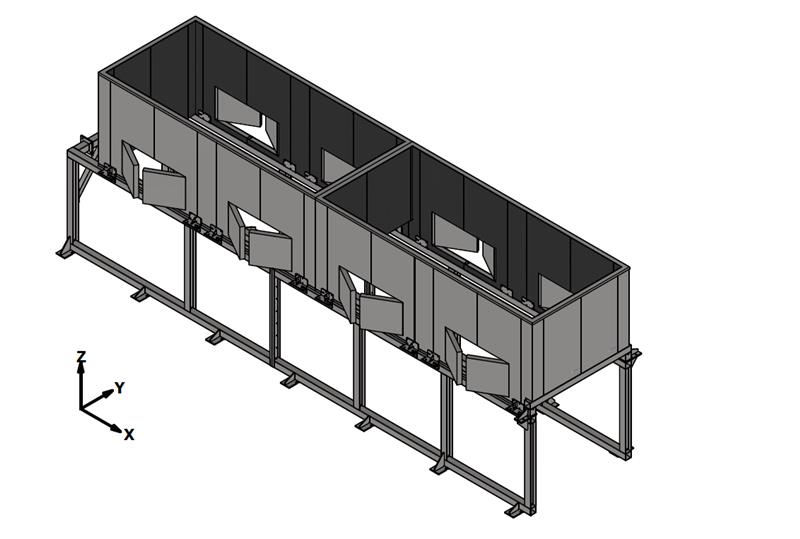
Custom discharge silencers were installed on each chiller to attenuate noise generated at the fan discharge point, one of the primary contributors to overall cooling equipment sound levels. Each silencer was engineered to meet airflow and performance requirements, delivering effective source-level noise reduction while minimizing pressure drop and maintaining system efficiency and service access within the rooftop layout.
Modular Rooftop Acoustic Screening:
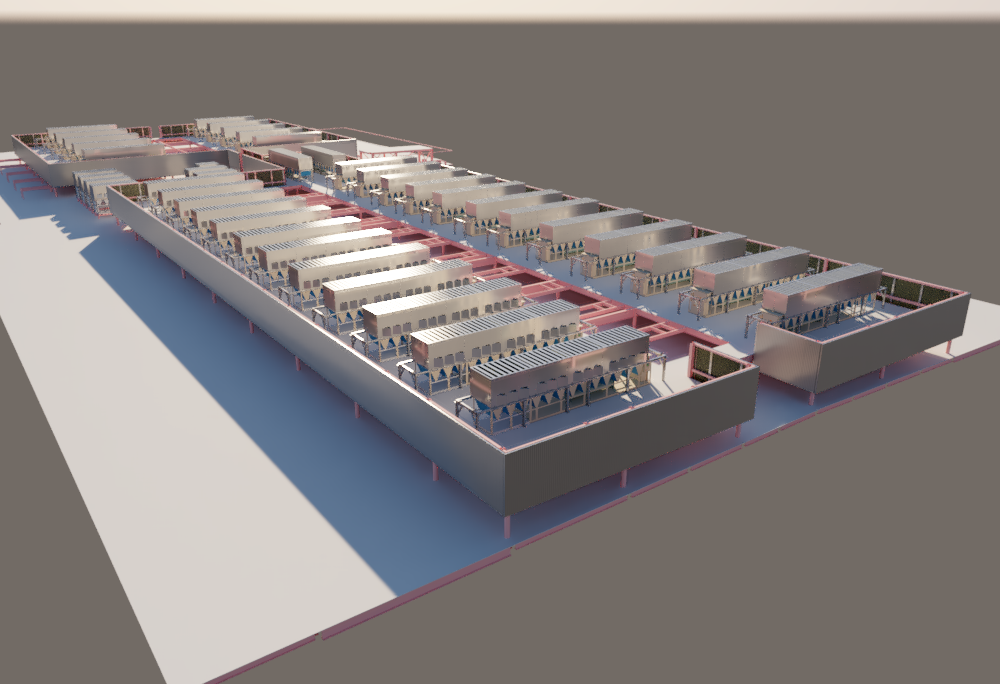
Acoustic screens were installed around rooftop mechanical areas to reduce sound propagation toward nearby residential receptors, with particular focus on shielding noise from chiller inlets and compressors. The screening systems were strategically positioned and engineered to disrupt line-of-sight sound transmission. This helped reduce off-site noise impact without compromising the performance or operability of the rooftop mechanical systems.


Installation
Modular Prefabrication and Rapid Installation Approach:
A key advantage of Parklane’s approach was the use of prefabricated, modular acoustic screening systems. Unlike conventional stick-built solutions, which require extended on-site labor and coordination, the modular assemblies were manufactured off-site and rapidly installed. This significantly reduced installation time, minimized site disruption, and supported overall schedule certainty.
Site-Specific Integration and Installation Scope:
The Aurora facility, with a larger mechanical yard, required approximately 2,000 linear feet of acoustically absorptive rooftop screening, while the Wood Dale facility required 240 linear feet. In both cases, the screening systems were designed to integrate structurally with the existing chiller platform and align with the architectural intent of the building facade.
High-efficiency installation execution achieved up to 240 linear feet of acoustic roof screening per day.
Site Constraints & Design Integration
Integration Within Rooftop Mechanical Infrastructure Constraints:
All acoustic systems were carefully engineered to integrate directly within the existing rooftop mechanical infrastructure, which featured dense equipment layouts and limited available space. The design process prioritized maintaining unobstructed airflow paths, ensuring that thermal performance of the cooling systems was not compromised.
Performance-Driven, Non-Intrusive Acoustic Design:
The compact integration of discharge silencers and acoustic screening systems ensured that all mitigation measures remained non-intrusive to core facility operations. By optimizing placement and structural coordination, the solution avoided interference with cooling system performance while still achieving effective noise reduction at the source and along key transmission paths.
This approach allowed the acoustic strategy to function as a seamless extension of the mechanical design, supporting both immediate performance requirements and long-term operational continuity.

Results
Parklane delivered a fully integrated acoustic mitigation strategy across both facilities, enabling compliance with stringent municipal noise requirements while maintaining reliable, efficient operation in a residential, noise-sensitive environment. By incorporating acoustic design early and assessing each rooftop and yard installation as part of a system-wide acoustic environment, Parklane developed a coordinated approach that reduced risk and avoided late-stage redesign.
The solution balanced airflow, pressure drop, and equipment performance to ensure seamless integration with the mechanical systems, allowing noise targets to be met without compromising cooling capacity or long-term reliability.
As a result, both facilities achieved regulatory compliance while maintaining operational efficiency and system integrity, delivering a de-risked solution aligned with community expectations and long-term performance requirements.

Read the full story
View the full write up to learn more about how we helped these data center facilities get noise compliant.