
Healthcare Facilities
Hamilton Health Sciences
When Hamilton Health Sciences Medical Campus, one of the largest hospital networks in Canada, expanded its generator systems, maintaining quiet, efficient, and compliant performance was essential. Parklane was commissioned to design and implement custom intake and discharge silencer assemblies that provided the necessary air movement and control to support generator combustion and heat rejection while also mitigating exterior noise to MOE and local mandates in order to provide dependable power supply across three hospital facilities.

Overview
When Hamilton Health Sciences, one of the largest hospital networks in Canada, set out to upgrade generator power systems across three of its key facilities — McMaster University Medical Centre, Hamilton General Hospital, and Juravinski Cancer Centre — reliability and performance were top priorities. Each site faced ongoing challenges around airflow, temperature regulation, noise from their generator systems and difficult space constraints. To ensure uninterrupted power and meet the current and future needs of each hospital, larger-scale natural gas generators were to be implemented to address peak shaving and continuous operational power.
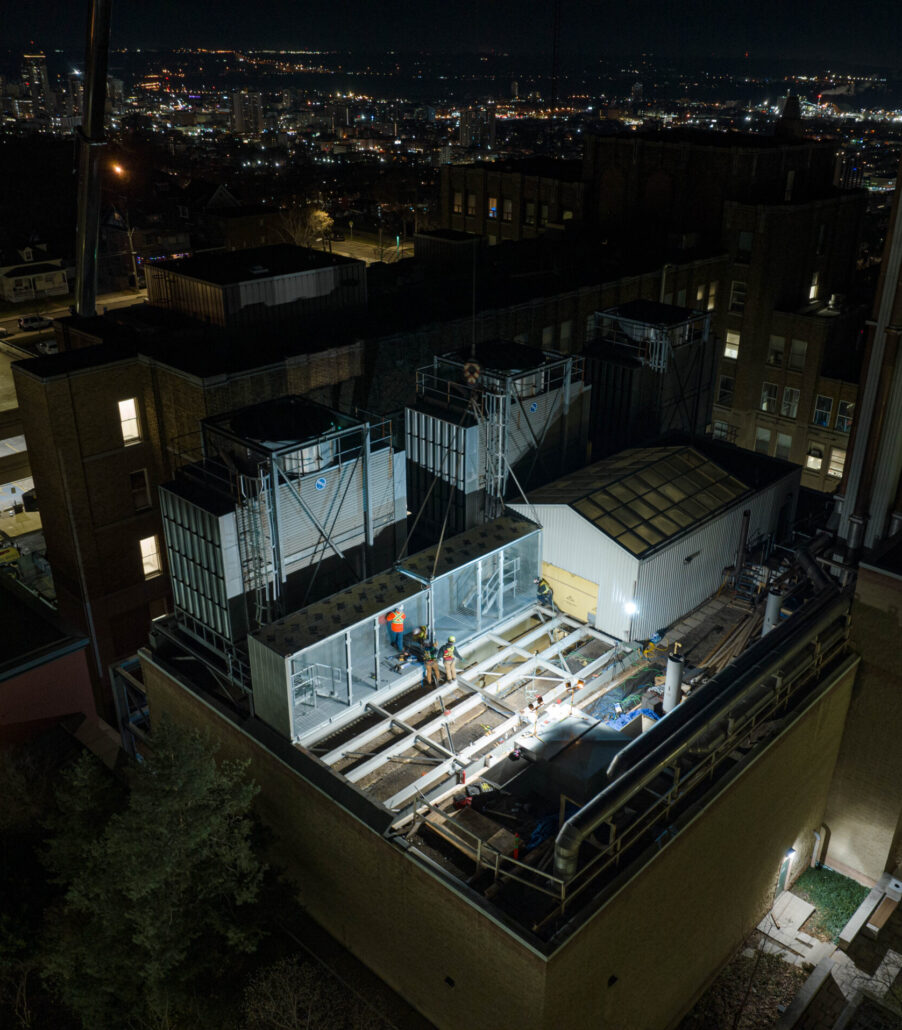
Parklane partnered with the project team to design and deliver fully integrated noise attenuation and airflow silencer solutions across all three sites. At McMaster University Medical Center (MUMC), six generators were equipped with custom intake and discharge silencers capable of managing 336,000CFM of exhaust airflow (each fan 56,000CFM) and 366,000CFM supply airflow (61,000CFM per fan), while Hamilton General’s rooftop system served three units at 168,000CFM exhaust and 183,000CFM supply ,and finally Juravinski’s compact site takes care of 4 units at 224,000CFM exhaust and 244,000CFM supply which required an innovative dual-silencer configuration to fit within its limited footprint. The result was seamless, high-performance systems that support 24/7 hospital operations — balancing power reliability, thermal performance, and acoustic comfort across critical healthcare environments.
The Project Facility
Aerospace
The Noise Source
2.5MW Natural Gas Generators
The Solution
Modular Intake and Exhaust Plenum Silencers for Generators
The Project Team
Structural Engineer – Atkinson Engineering General Contractor – CEM
Mechanical Engineer – Hallex
Acoustic Engineer – Vintec
Reason for Mitigation:
New generators required effective air circulation, cooling and noise mitigation due to their proximity to patient rooms, office space and hospital operations.
Project Challenges

Complex Acoustic and Engineering Requirements
Each hospital site demanded a balance between exceptionally high insertion loss and minimal pressure drop — a combination that set an exacting standard for acoustic performance. Meeting these targets required close collaboration across the engineering team, ensuring every silencer design achieved the necessary noise reduction while integrating seamlessly into the unique mechanical systems and layouts of each facility. The result was a series of precision-engineered solutions tailored to both the acoustic and operational needs of these critical healthcare facilities.
Strict Pressure Allowances
Maintaining optimal airflow with minimal system pressure drops was essential to the performance and efficiency of the generator systems. Parklane’s team achieved the required low-pressure drop across all silencer packages through strategic fan selection and system design optimization, ensuring consistent airflow and reliable operation across all three hospital sites — without compromising acoustic performance.

Restrictive Site Constraints
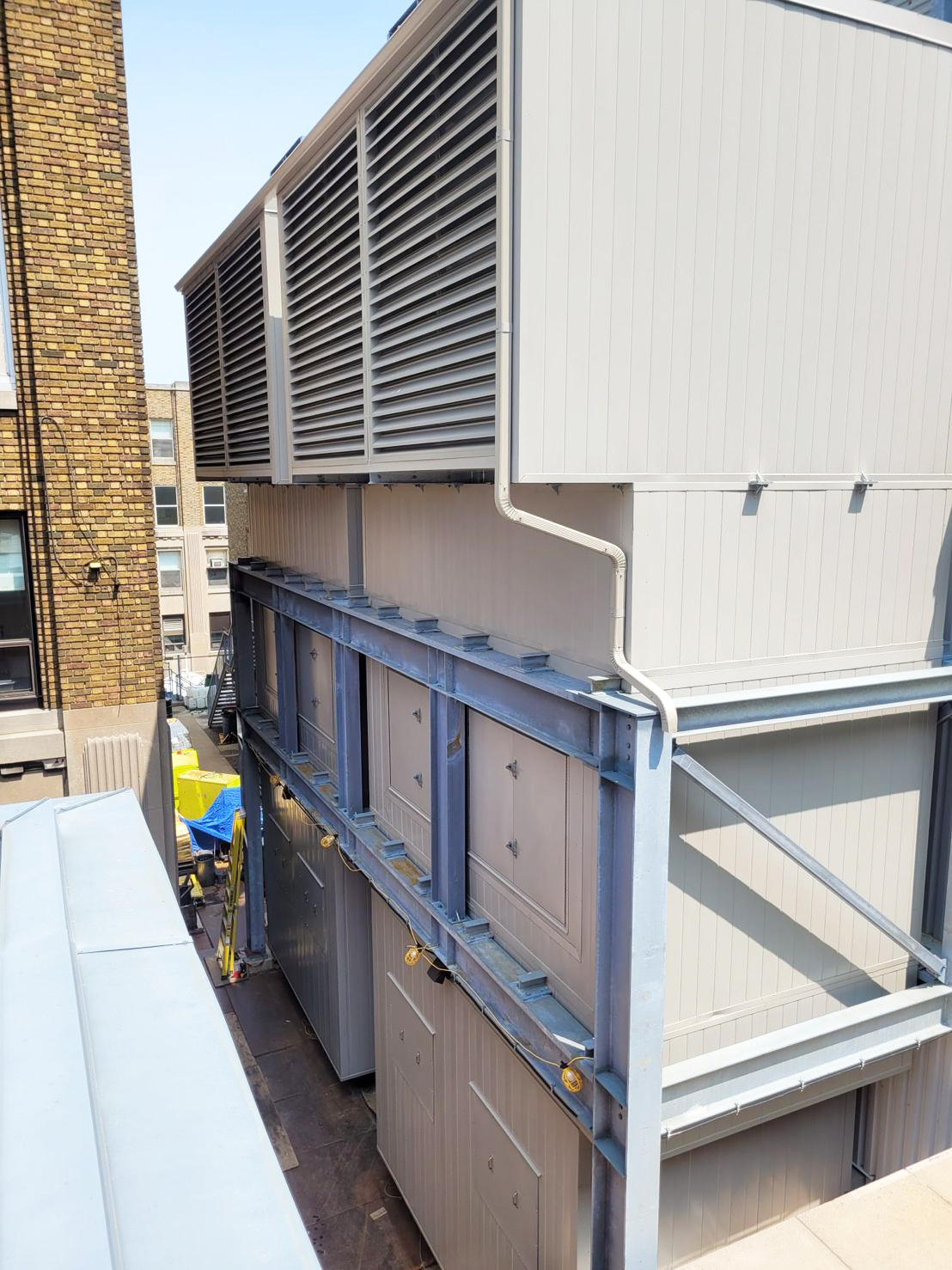
Each facility presented unique spatial and logistical challenges that influenced system design and installation. At MUMC, basement generator systems required grade-level intake and exhaust configurations, while Juravinski’s rooftop units demanded careful acoustic control near adjacent patient care areas. The large-scale silencers, designed to handle significant airflow, were custom-engineered to fit within these confined environments — demonstrating Parklane’s ability to adapt complex solutions to even the most restrictive hospital sites.
Project Solution
Design
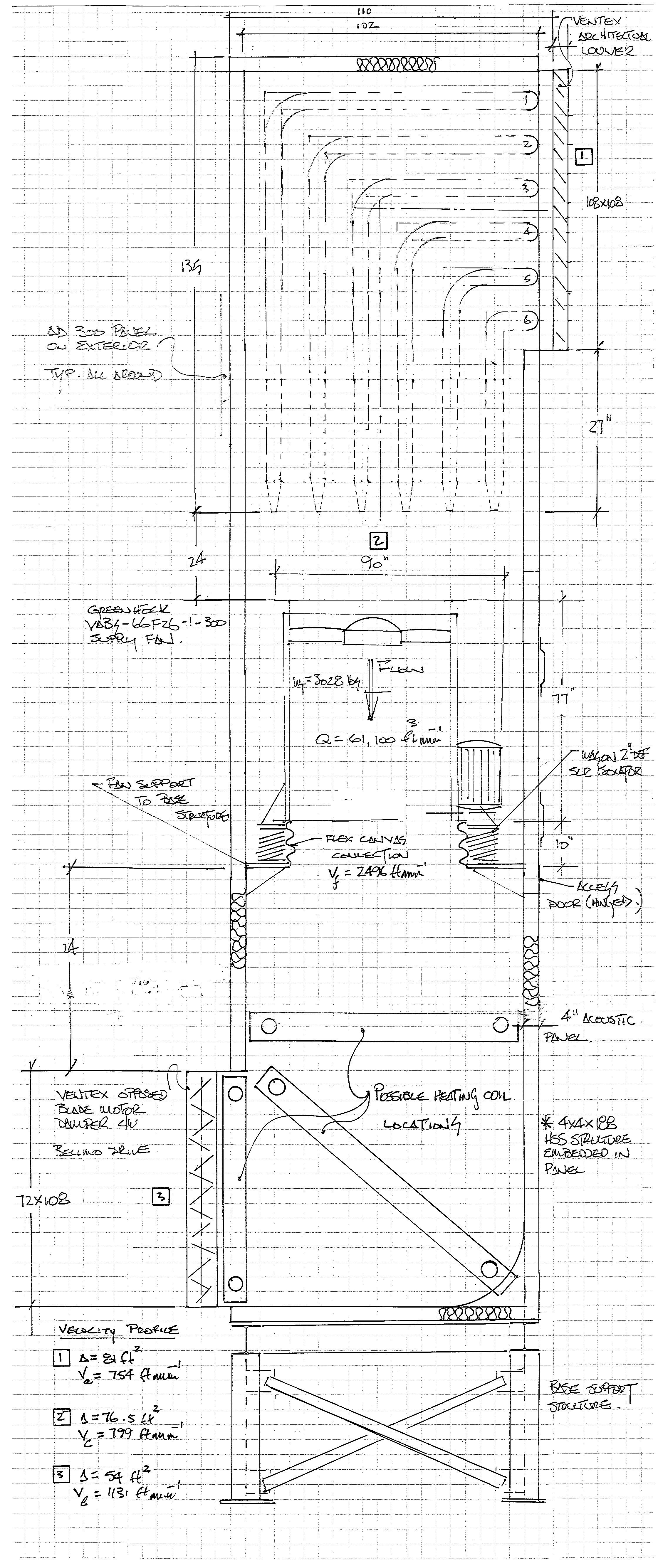
Parklane designed large-scale plenum silencer modular arrangements that were pre-manufactured for seamless integration into each building’s structural and mechanical framework. The silencer designs included:
Supporting Base Structures:
At both grade and rooftop levels, the engineered structural platforms served dual purposes — acting as suspension points for the silencers and as the foundation for the acoustic plenums. This integrated approach simplified system alignment, optimized load transfer, and enhanced overall structural efficiency.
Modular Supply and Return Air Silencers:
Each silencer was custom-fabricated with built-in structural steel to maintain strength and alignment, enabling rapid on-site assembly and seamless integration into the mechanical system. The modular design provided both flexibility and structural continuity across varied installation conditions.
Roof-Mounted Acoustic Plenums:
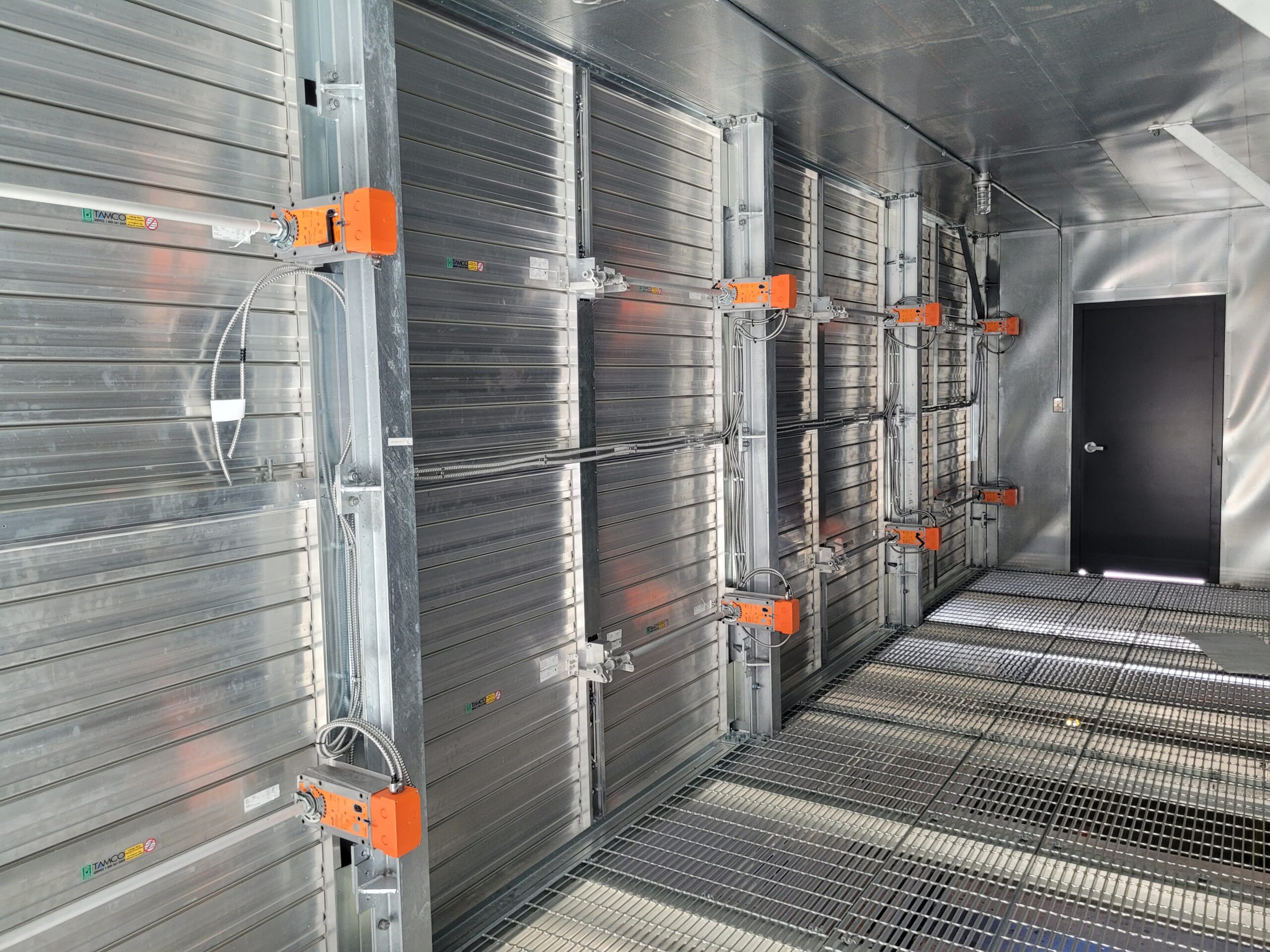
To minimize on-site construction and commissioning time, each plenum was shipped as a complete, factory-assembled module — including louvers, integrated motorized damper assemblies, architectural finishes, all electrical wiring (high and low voltage), and fully installed acoustic silencing elements. This ensured consistent quality control and simplified field installation.
Integrated Room Ventilation:
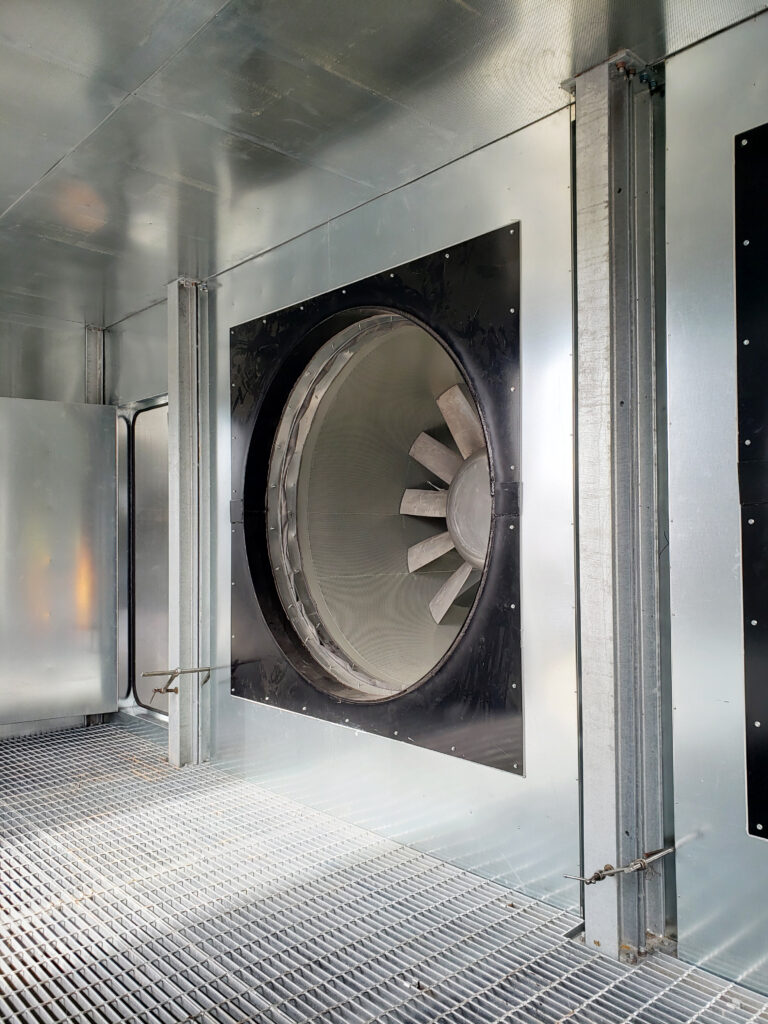
The ventilation systems featured Greenheck model VABS 66” diameter vane axial fans, factory-installed directly within the silencer assemblies. This plug-and-play configuration delivered immediate functionality upon arrival, reducing installation time and ensuring reliable, balanced airflow performance across all generator systems.

Installation
Pre-Fabrication for Modular Install:
Each complete silencer system was pre-fabricated off-site and delivered in a fully modular format, eliminating the need for significant field welding and reducing on-site assembly time. This approach allowed installation to proceed efficiently with minimal disruption to concurrent construction activities. To ensure precise integration, Parklane developed a comprehensive BIM model for the project, conducting regular clash analyses and coordinating installation pathways to avoid interference with surrounding systems — achieving a seamless fit within each facility’s complex infrastructure.
Ease of Future Serviceability:
The modular design not only streamlined installation but also prioritized long-term maintainability. Each system was configured to keep major components fully accessible for inspection and servicing, minimizing downtime and ensuring ongoing operational reliability for the hospitals’ critical power systems.
Community Response
Mitigated Noise Impact:
Parklane’s engineered silencer solutions ensured that generator operations across all hospital sites operated quietly and in full compliance with MOE lot line noise requirements. The systems were designed to prevent noise transfer to nearby receptors — both external and within the hospital environment — preserving the integrity of patient care and day-to-day operations. Through careful acoustic modeling and precision fabrication, the installations effectively minimized sound transmission to sensitive areas, including patient rooms, offices, and critical hospital spaces.
Effective Airflow:
Each system was engineered to balance airflow performance with environmental comfort. The integration of motorized dampers and fan controls enabled precise management of air movement through the silencers, preventing unwanted heating or cooling effects within adjacent hospital areas. This dynamic control allowed for seamless adaptation to changing outdoor conditions, ensuring optimal airflow efficiency and thermal balance across all seasons.

Results
The project achieved full compliance with provincial noise regulations for the generator ventilation systems, demonstrating Parklane’s commitment to both performance and environmental standards.
By leveraging a pre-engineered modular approach, on-site installation time was significantly reduced, accelerating project delivery by several months. Close coordination with mechanical, structural, and architectural teams ensured seamless integration into each facility without conflicts, maintaining operational continuity throughout the construction process.
The client received an acoustically compliant, efficient, and reliable ventilation system that not only met immediate performance requirements but also offered long-term maintainability and operational resilience.
Read the full story
View the full write up to learn more about how we helped this healthcare campus of facilities get noise compliant.
Let's work together
Contact a member of our team now to find out how Parklane can help provide an effective, customized solution to your organization’s noise control challenges.