
Industrial Manufacturing
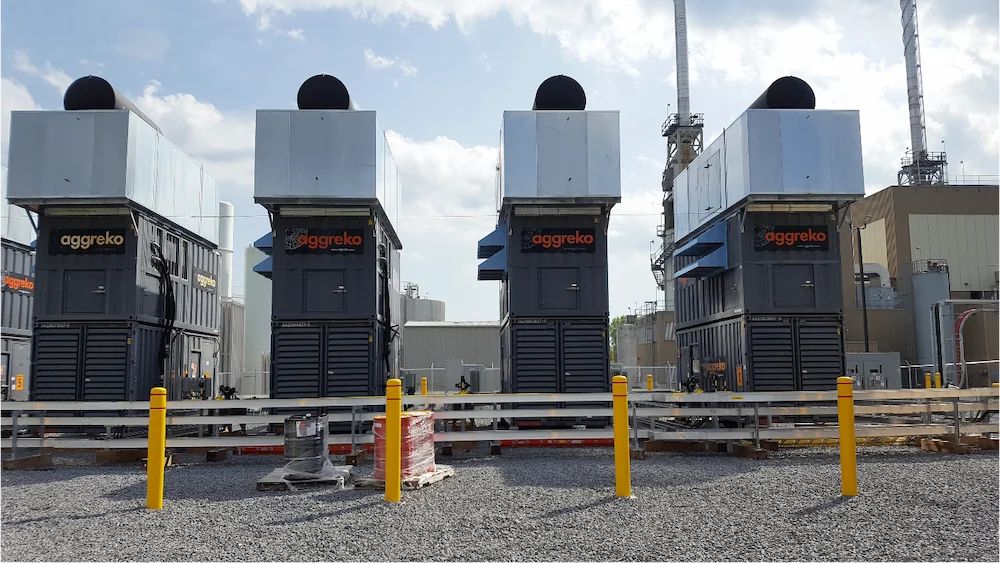
Aggreko Peak Shaving Generators
An industrial facility operating natural gas peak shaving generators required a compliant noise control solution under strict continuous-source regulations, without disrupting operations or access. Parklane delivered a modular acoustic system that met all regulatory limits with zero downtime and achieved an 80% project cost savings.

Overview
An industrial manufacturing facility, operating a series of natural gas peak shaving generators, required a noise control solution to address regulatory exceedances identified during generator operation. Unlike emergency standby units, these generators are operated intentionally during utility-defined peak demand periods and are therefore classified as continuous noise sources under local sound ordinances. This classification subjected the facility to significantly stricter noise regulations and eliminated the possibility of regulatory exemption.
The challenge was to bring the generators into compliance without disrupting production, impacting peak shaving participation, or compromising long-term service access, while avoiding major site construction. Parklane was engaged to design and deliver a modular, site-sensitive acoustic solution that could be installed within limited work windows, prior to the generators being called into operation, while preserving full generator functionality and maintenance access. Installation activities were required to cease once the generators were running due to elevated operating temperatures.
The resulting solution achieved full regulatory compliance with no unplanned generator downtime, eliminated the need for a large-scale acoustic barrier, and was delivered at approximately 20% of the cost of the original concept, representing an 80% project cost savings.
The Project Facility
Industrial Manufacturing Facility
The Noise Source
Peak Shaving Natural Gas Generators
The Solution
Modular Acoustic Plenums and Acoustic Intake Hoods
The Project Team
Acoustic Engineer – HGC
OEM – Aggreko
Client – Invista
Reason for Mitigation:
Peak shaving generators were required to comply with stringent continuous noise limits while maintaining uninterrupted facility operations, full equipment serviceability, and minimal construction impact
A Head’s Up
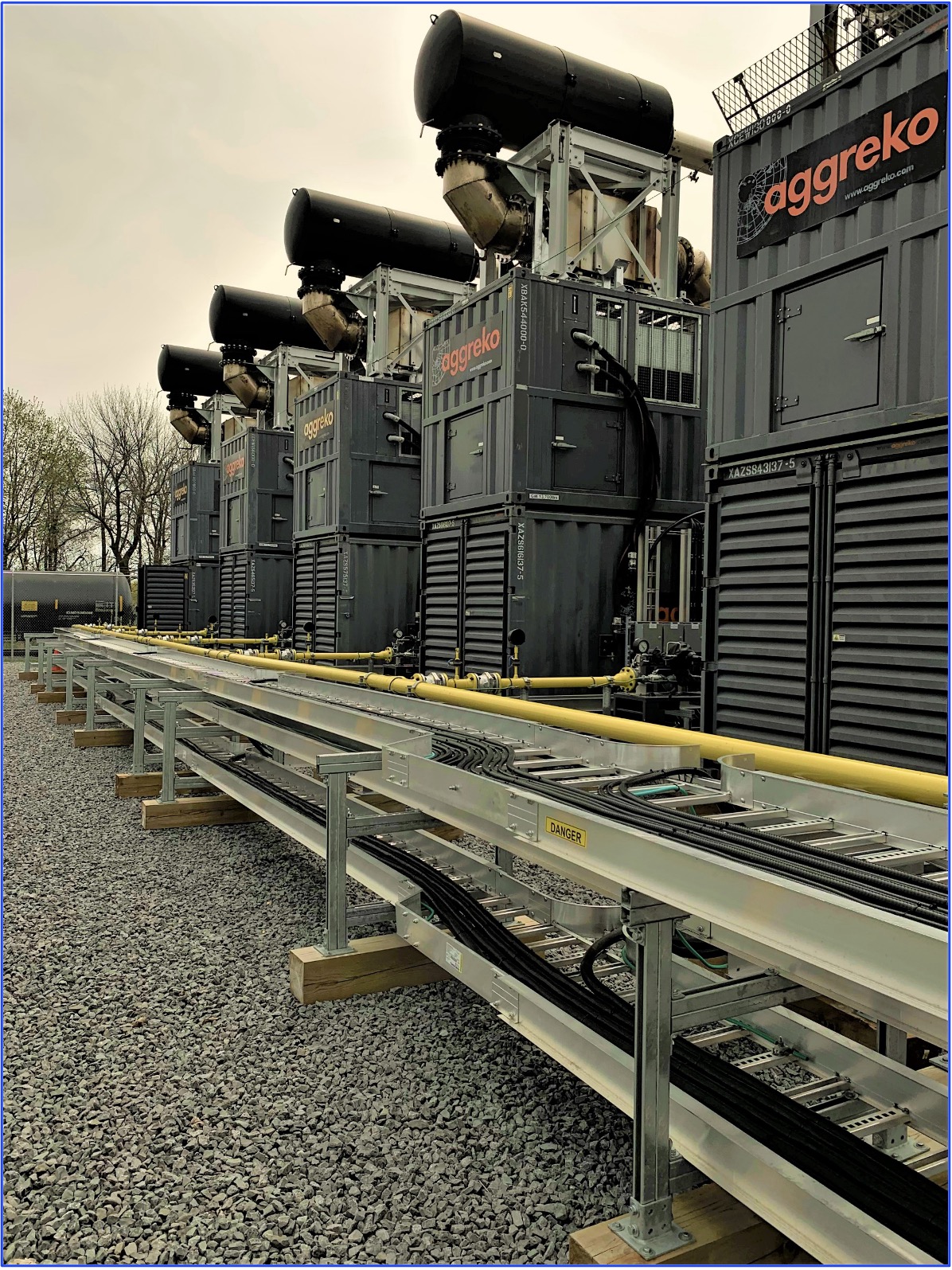
What Are Peak Shaving Generator Systems?
Peak shaving generators are routinely run during periods of high electrical demand to reduce utility costs and support grid stability. In many jurisdictions, facilities must operate these generators consistently during peak events to remain eligible for utility and government incentive programs.
Because these units operate outside of emergency conditions, they are regulated as continuous noise sources rather than standby equipment. This distinction was a critical driver of the acoustic design approach, requiring Parklane’s solution to achieve sustained noise reduction performance rather than temporary or event-based mitigation.
Project Challenges
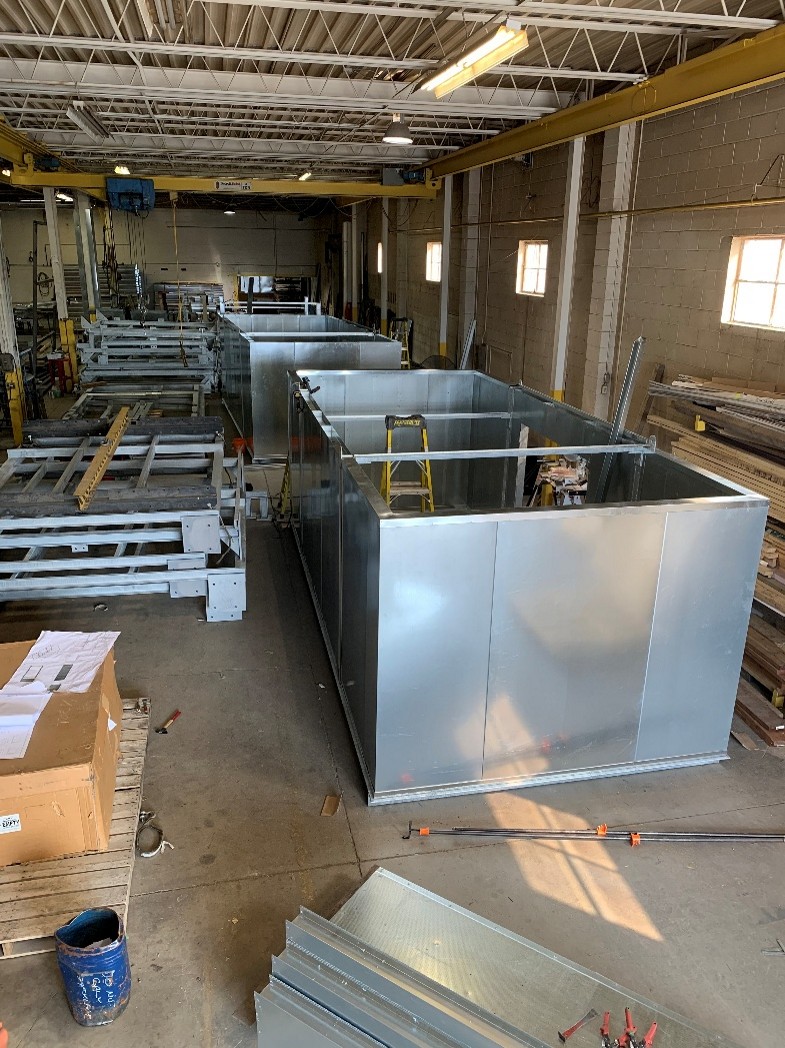
Modular Designs: Solving Restricted Access and Installation Complexity
A critical challenge on this project was the extremely limited access available for installation work. Because the generators were actively supporting peak shaving operations, they were required to run during utility-defined demand periods and could not be taken offline for extended durations.
When operating, the generators and associated combustion components reached temperatures that made them unsafe and inaccessible for installation activities. As a result, Parklane’s installation team was restricted to narrow daily shutdown windows — typically just 2 to 3 hours per day — during which work could safely occur. These windows were further constrained by local bylaws, site safety requirements, and operational policies prohibiting work on energized or running equipment.
This slim margin for access required meticulous pre-planning, precise installation sequencing, and fully prefabricated solutions. Every daily work window needed to be maximized with little room for error, as missed activities could delay the project or impact peak shaving operations. The constraint reinforced the importance of Parklane’s modular design approach and disciplined execution strategy, ensuring installation efficiency while maintaining uninterrupted facility operations.
Identification of Discrete Noise Sub-Sources
Parklane worked closely with the project’s acoustic consultant to identify the dominant contributors to the facility’s noise exceedances. Detailed analysis confirmed that:
– The primary noise sources were breakout noise from the combustion piping and SCR casing located at the top of each generator system
– A secondary contributor was breakout noise through the upper compartment housing the unit coolers
This source-based understanding allowed the mitigation strategy to be precisely targeted, avoiding unnecessary or oversized infrastructure.


Structural Integration and Serviceability Constraints
The acoustic system needed to integrate directly with the existing generator enclosures without introducing secondary steel, expanding the footprint, or obstructing routine maintenance activities. Any solution that had limited access to combustion piping, SCR components, or cooling systems would negatively impact long-term operability.
Project Solution
Design
Localized, Source-Based Noise Control:
Rather than implementing a site-wide noise barrier or enclosure, Parklane developed a localized containment strategy focused directly on the identified noise sub-sources. This approach reduced both construction complexity and project risk while maximizing acoustic efficiency.
Ventilation Intake Acoustic Hoods:
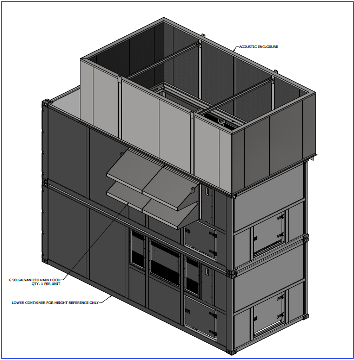
To address secondary noise emissions, Parklane designed and manufactured acoustic hoods for the unit cooler ventilation intakes. These hoods were mounted directly to the enclosure’s structural tubing and included:
• Integrated bird screens
• Durable, weather-resistant construction
Together, these elements provided effective noise attenuation without compromising airflow or long-term durability.
Acoustic Plenums:
Custom absorptive acoustic plenums were designed to enclose the combustion piping and SCR systems at the top of each generator. Each plenum was constructed on an integrated structural frame engineered to interface directly with the generator enclosure’s existing framework.
This eliminated the need for additional secondary steel and allowed the plenums to be installed as self-supporting modules. Acoustically rated access doors were incorporated to maintain full serviceability, with secondary access available directly from within the generator’s enclosure.
Installation
Prefabrication for Restricted
All acoustic plenums and intake hoods were fully prefabricated by Parklane in modular sections. This approach was essential due to operational constraints, as installation work could only be performed while the generators were offline.
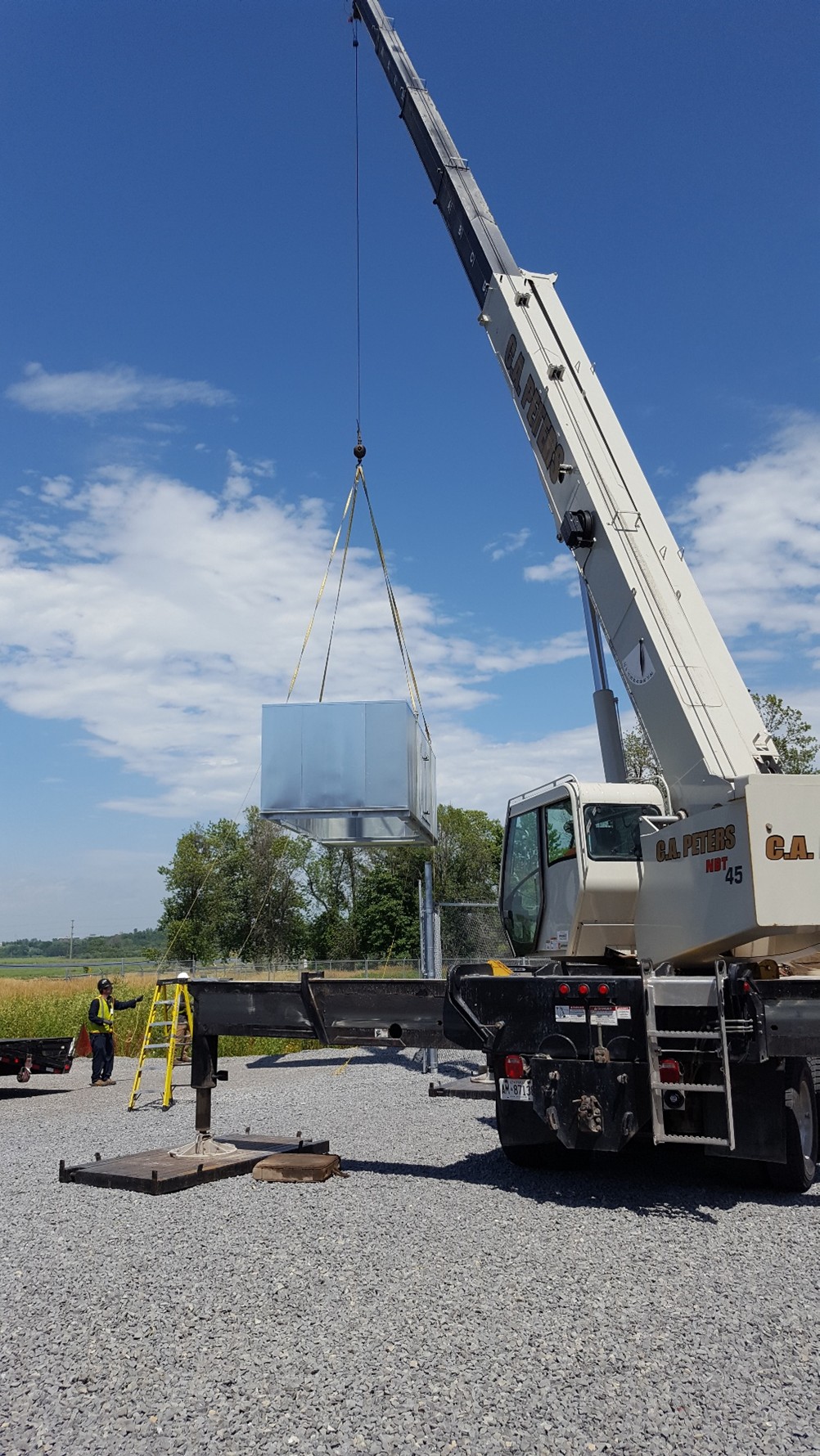
The modular design allowed each system to be installed in one to two crane lifts per unit, minimizing on-site activity and reducing coordination requirements across the active manufacturing site.
Efficient On-Site Assembly:
Parklane’s fully modular design and well-defined installation sequencing enabled efficient on-site assembly without the need for specialized support. Daily installation activities were coordinated within 2–3 hour shutdown windows, allowing the facility to maintain peak shaving operations and avoid production impacts.
Site Constraints & Risk Reduction
Avoidance of Large-Scale Construction:
An earlier concept involving a 40-foot acoustic barrier was eliminated due to extensive underground utilities, excavation requirements, and high construction costs. Parklane’s integrated generator-mounted solution avoided the need for foundations, trenching, or utility relocation entirely.
Compact, Integrated Footprint:
By attaching directly to the generator enclosures, the acoustic solution maintained a compact footprint, preserved valuable site space, and simplified future maintenance activities. The self-supporting design also reduced long-term structural risk and inspection requirements.

Community Response
Because of the generators’ continuous operation classification, community noise impact was a key concern. Parklane’s solution ensured that noise levels were reduced within the allowable limits, protecting nearby receptors and supporting the facility’s relationship with regulatory authorities and the surrounding community.

Results
The final solution achieved full compliance with all applicable sound ordinances while ensuring there was no unplanned generator downtime, no disruption to underground utilities or existing site infrastructure, and full preservation of maintenance and service access. By eliminating the need for a large acoustic barrier, the project was delivered at approximately 20% of the cost of the original concept, with prefabrication and modular installation significantly reducing construction risk and enabling completion within strict operational constraints. In the long term, the facility benefited from a durable, modular, and service-friendly acoustic solution that supports ongoing peak shaving operations while meeting regulatory requirements, operational needs, and community expectations.
Read the full story
View the full write up to learn more about how we helped this industrial manufacturing facility get noise compliant.
Let's work together
Contact a member of our team now to find out how Parklane can help provide an effective, customized solution to your organization’s noise control challenges.