

Featuring Laura Fennema, Director of Project Delivery
It’s easy to assume that larger projects are automatically more difficult to deliver. More stakeholders, larger budgets, longer schedules, and greater volumes of work can often bring more challenges.
But project size and project complexity are not one in the same.
And while the challenges may look different from one project to the next, the ability to manage them effectively can have significant implications for project schedules, operational continuity, and the financial outcomes of the stakeholders involved.
Some of the most straightforward, streamlined projects can span multiple sites and involve significant coordination of trades and equipment. At the same time, a seemingly simple retrofit can uncover structural limitations, access restrictions, operational constraints, and stakeholder challenges that require extensive planning and team alignment to overcome.
For Laura Fennema, Director of Project Delivery, successful project delivery starts with understanding complexity rather than focusing on scale.
“The real question is not how big the project is, but where the uncertainty sits and what it will take to manage it.”
— Laura Fennema, Director of Project Delivery
What Actually Defines Project Scale?

From a project delivery perspective, project scale extends far beyond contract value or physical size.
Facility location, safety requirements, existing infrastructure, material specifications, scheduling constraints, stakeholder involvement, and regulatory requirements all influence how a project is planned and executed.
As Laura explains:
“Location is a major factor. Working on a new-build site is very different from installing equipment in an active manufacturing plant or beside a live transformer, where access, crane staging, shutdowns and safety controls can drive the plan.”
— Laura Fennema, Director of Project Delivery
The number of unknowns often provides a more accurate measure of project complexity than size alone.
Why Smaller Projects Can Be More Challenging
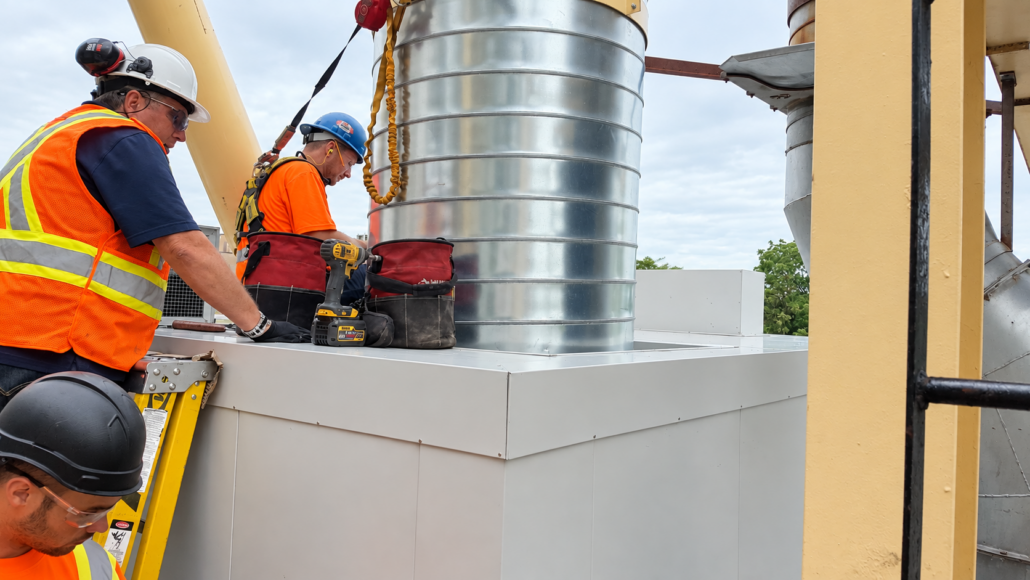
One of the most common misconceptions in project delivery is that a small project should automatically be easier to execute.
In reality, smaller projects often contain far less flexibility.
They frequently involve custom solutions, compressed timelines, existing site constraints, and little room for rework if conditions change.
A customized retrofit may require extensive engineering investigation before implementation can even begin. Existing structures, operational requirements, safety considerations, and access constraints all add complexity that is not necessarily visible from the original scope.
“What can begin as a relatively simple installation can become an increasingly elaborate structural solution as each site constraint gets uncovered.”
— Laura Fennema, Director of Project Delivery
This is why front-end investigation, assessment, and planning remain critical to successful project delivery.
The Advantage of Structure on Large Programs

Large-scale programs bring their own challenges.
This is particularly evident in the data center sector, where Parklane supports some of the leading global hyperscalers in delivering complex, high-volume environmental noise control solutions.
These projects operate at an entirely different level of scale, often involving hundreds of pieces of mechanical equipment, extensive acoustic infrastructure, multiple engineering disciplines, and highly coordinated fabrication and installation schedules. With numerous stakeholders working toward critical commissioning and operational milestones, successful delivery depends on far more than the ability to manufacture and install solutions. It requires the ability to manage complexity across every stage of execution.
Managing high volumes of equipment, coordinating multiple stakeholders, and maintaining schedule alignment across numerous workstreams requires a high level of organization and communication.
However, larger projects often benefit from something smaller projects rarely have, repeatability.
When teams can standardize elements of engineering, fabrication, logistics, and installation, efficiencies begin to emerge.
Laura points to Parklane’s installation of 34 Gravity Barriers in 34 days as an example.
“Repeatability does not necessarily mean producing the exact same piece over and over. It can also mean standardizing how unique pieces are designed, fabricated, handled and assembled.”
— Laura Fennema, Director of Project Delivery
At the same time, experience has shown that repeatability should never lead to complacency.
External factors including weather, labour availability, supply chain conditions, and material costs can quickly introduce new risks.
“Every project is unique. Some projects may look very similar, but even different phases of the same project can behave differently by the time execution begins.”
— Laura Fennema, Director of Project Delivery
Risk Changes Form at Every Scale
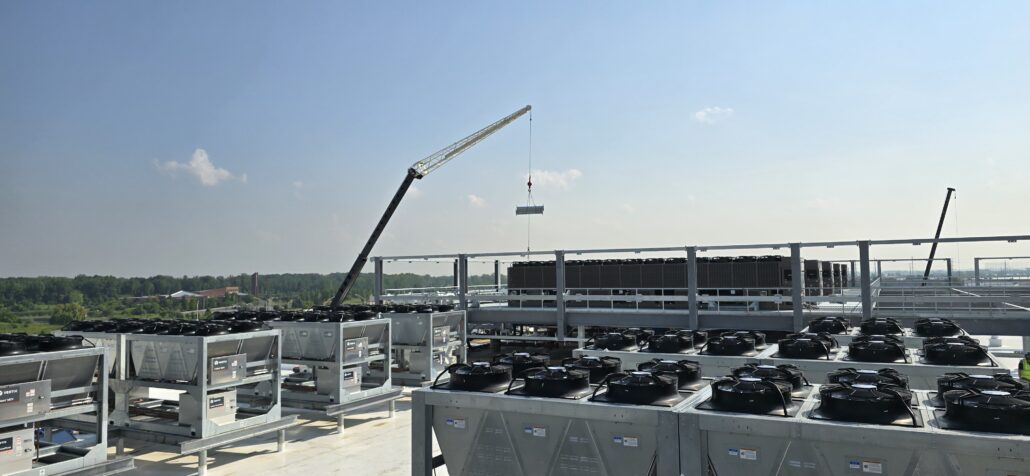
Project risk does not simply increase as projects become larger.
It changes shape.
On large programs, maintaining momentum becomes one of the greatest challenges. Small disruptions can create cascading impacts across multiple teams and schedules.
“Once the project is moving, a disruption can derail work across multiple teams, reducing throughput and creating schedule impacts that compound quickly.”
— Laura Fennema, Director of Project Delivery
For owners and developers of large-scale data center projects, these disruptions carry consequences that extend far beyond the immediate cost of construction.
Hyperscale data center developments are driven by aggressive timelines, significant capital investment, and critical operational commitments. Delays during engineering, permitting, procurement, fabrication, or installation can create cascading impacts that threaten commissioning schedules, revenue generation, and the ability to bring critical computing capacity online.
Project-delays of only a matter of days can lead to significant financial exposure per sector standards:
- 1-week delay: $100 million
- 2-week delay: $300 million
- 3-week delay: $500 million
For stakeholders managing developments of this magnitude, schedule certainty is not simply a project delivery objective. It is a critical component of financial and operational risk management.
This is why proactive planning, early coordination, and disciplined execution are so important. Identifying constraints before they become disruptions, maintaining alignment across stakeholders, and anticipating potential challenges can make the difference between keeping a project on track and introducing costly delays.
Smaller projects often experience a different type of risk.
Because schedules and budgets are typically tighter, there is often little tolerance for surprises. A missed measurement, unforeseen structural issue, or unexpected approval requirement can have a significant impact on the overall delivery.
Understanding where those risks exist is often more important than the overall size of the project itself.
Consistency Without a One-Size-Fits-All Approach
While every project requires a different execution strategy, Parklane’s core project delivery philosophy remains consistent.
Regardless of project size, the focus remains on problem-solving, collaboration, and delivering a solution that addresses the actual challenge facing the client.
As more information becomes available, the approach may need to evolve.
“At the end of the day, the solution has to fit the actual problem, not simply follow the original plan. If the information tells us we need to pivot, we pivot.”
— Laura Fennema, Director of Project Delivery
That flexibility allows teams to adapt while still maintaining consistent quality, communication, and accountability standards across every project.
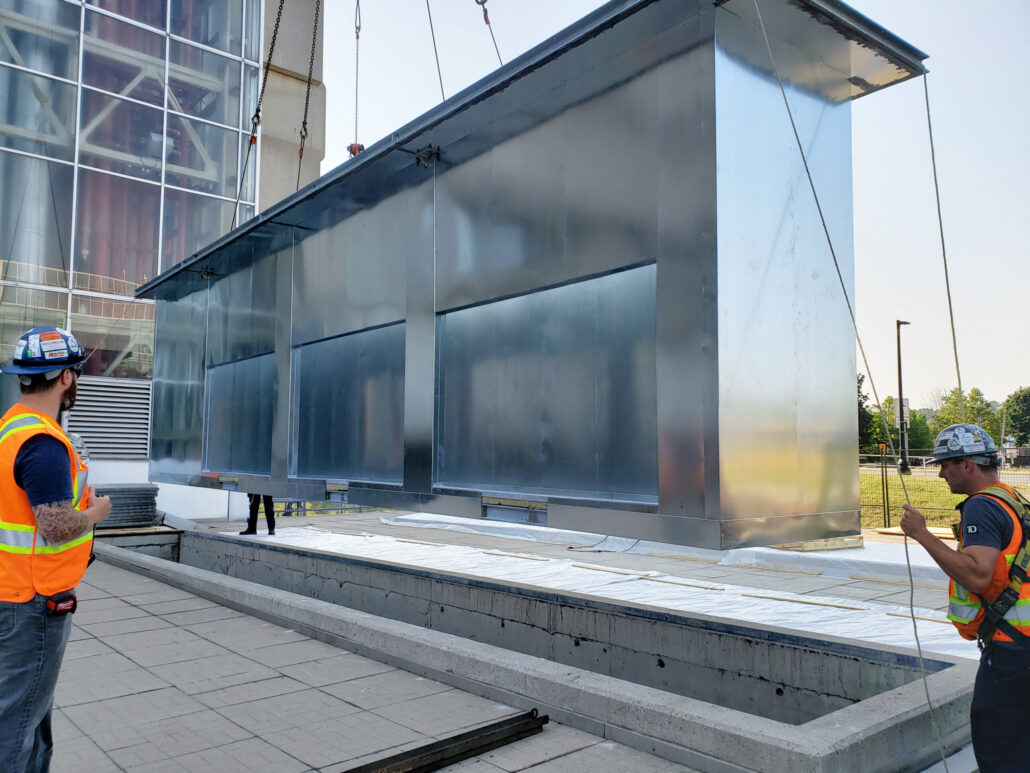
Complexity Is the Real Measure
The assumption that larger projects are inherently more difficult oversimplifies project delivery.
Some projects create complexity through volume. Others create complexity through uncertainty.
The most successful project teams recognize the difference.
“I wish clients knew that project size and complexity do not always go hand in hand. A small project can become complicated simply because there are more unknowns.”
— Laura Fennema, Director of Project Delivery
Whether delivering environmental noise control solutions for some of the world’s largest hyperscale data center developments, managing complex industrial programs, or executing highly customized retrofits, successful project delivery comes down to understanding where complexity exists, what is at stake, and how to manage the risks before they impact execution.
For some projects, that means overcoming highly specific technical or site constraints. For others, it means protecting critical schedules where even a relatively minor disruption can carry significant financial and operational consequences.
Because in project delivery, size is only one variable.
Complexity is what truly matters.
To learn more about the Parklane Process: https://parklanemechanical.com/our-process
To learn more about real-world applications: https://parklanemechanical.com/noise-control-case-studies
To contact us for more information: https://parklanemechanical.com/contact